Chapter 02
Tyres
Four patches of rubber are the only parts of the car touching the road. Every bit of braking, cornering and acceleration goes through them. Look after them and you win; wear them out and you crawl home.
Builds on Chapter 01: Your first race.
Five rubbers, three per race
Pirelli makes 5 dry tyres for 2026, from the hardest, C1, to the softest, C5. They look identical apart from the coloured stripe; the difference is in how soft and sticky the rubber is.
For each race, Pirelli picks three neighbouring ones and calls them hard (white), medium (yellow) and soft (red). So “soft” is a different rubber at a rough, hot track than at a smooth street circuit.
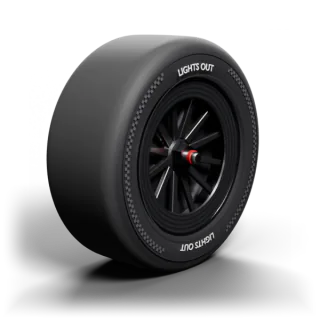
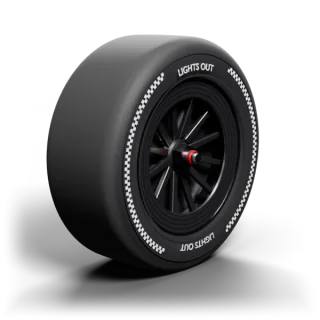
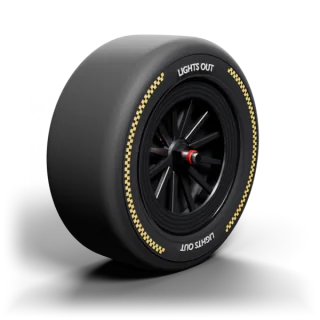
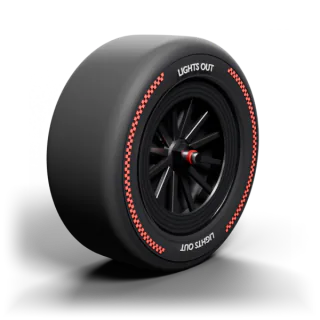 C1
- C2hard
- C3medium
- C4soft
- C5
- Harder rubber
- Less grip, so slower, but it lasts much longer.
- Softer rubber
- More grip and faster laps, but it wears out sooner.
Slicks, inters and wets
The dry tyres are slicks. They’re completely smooth, to put the most rubber on the road. When it rains, a slick aquaplanes on the water, so there are two grooved tyres too. The is for a damp track; the full wet, with deep grooves, pumps water out from under the car in heavy rain.
On a normal weekend each driver gets 13 sets of dry tyres (usually 8 soft, 3 medium and 2 hard), plus 4 sets of intermediates and 3 of wets, for practice, qualifying and the race.
Soft
Fastest, shortest-lived. Qualifying and short stints.
Medium
The all-rounder. Often the race tyre.
Hard
Slowest but toughest. Long stints.
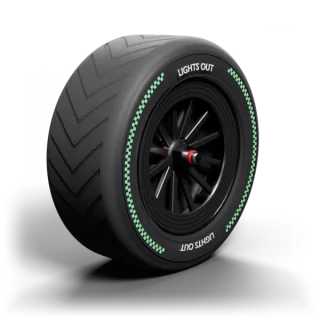
Intermediate
A damp track or light rain.
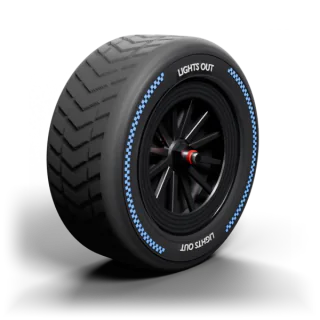
Wet
Heavy rain and standing water.
Plan your own race
A soft tyre is fastest, but it wears out quickly. A hard tyre is slower, but lasts. And in a dry race every driver must use at least two different compounds, so everyone has to stop at least once.
Try it: choose the tyres for each and the lap you pit. Stop too early and the next tyres have to last too long; stop too late and you fall off . The gap between good plans is often a second or two, after an hour and a half of racing.
Race time1:26:57.3
0.7 s slower than the best plan.
A made-up 57-lap race. Each stop costs 21 s in the pit lane. Laps get quicker as fuel burns off, and slower as the tyres wear.
How a tyre dies
Tyres only grip well in a narrow temperature window. Too cold and they slide; too hot and they wear out fast. Teams warm dry tyres in electric blankets before they go on the car, and drivers spend the whole race trying to keep them in that window.
Degradation
Every lap wears the tread a little, and the car gets a little slower. Teams call it , and how fast it happens decides how many stops a race needs.
The cliff
A worn tyre usually loses grip slowly. Push it too far and it falls off instead. Lap times drop by seconds and the driver has to pit.
Graining
Little rolls of rubber tear off and stick back to the tread, so the tyre slides on them. often clears after a few laps of careful driving.
Blistering
When the inside of the tyre gets too hot, bubbles form and burst, leaving chunks missing from the tread. doesn’t recover.
Flat spot
Lock a wheel under braking and it skids on one patch, scrubbing it flat. After a the car vibrates every time that spot comes round.
When to switch in the rain
Rain makes strategy a guessing game. Each kind of tyre is fastest in a different range of wetness, and the point where the next one becomes quicker is the . Pit too soon and you slither around; too late and rivals on the right tyres fly past. Drag the slider to see where the lines cross.
Fastest now: Slicks
What to watch for on race day
- The coloured stripe on the tyre wall. Red, yellow or white tells you which compound each driver is on, and who still has to make their stop.
- Lap times on the timing screen creeping up late in a . When they suddenly jump by a second or more, a driver has hit .
- A drying track after rain. The first driver to gamble on slicks is betting on the . Get it right and they gain seconds a lap.